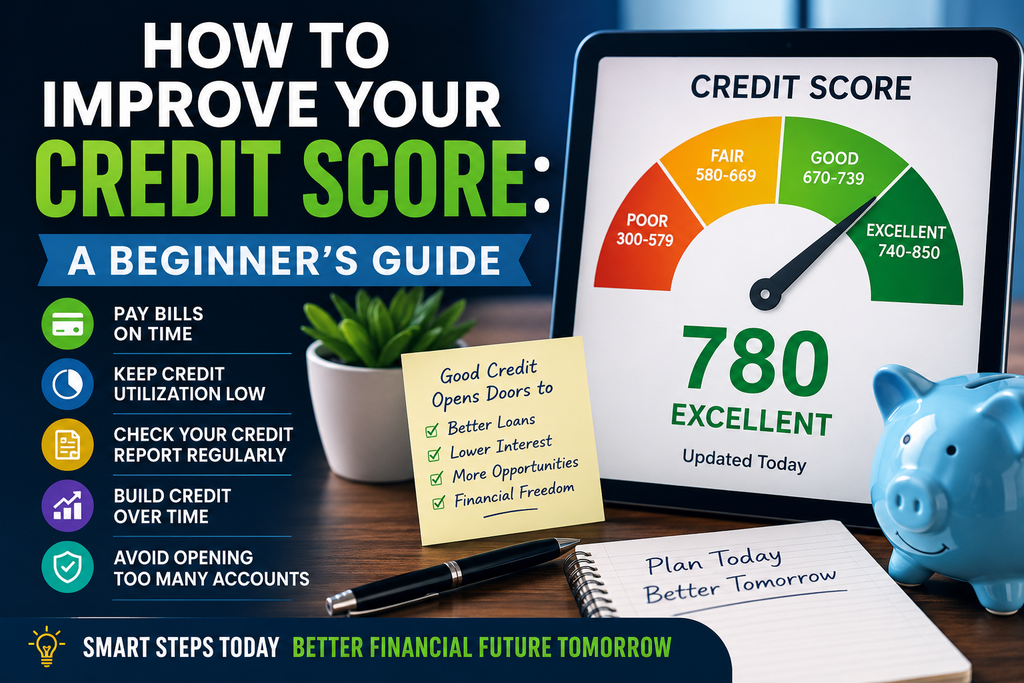
Your credit score can play an important role in your financial life. Lenders may use credit scores when evaluating applications for credit, and your score can influence the interest rate or terms you are offered.
The good news is that you can take steps to better understand your credit and develop healthier credit habits.
If you’re wondering how to improve your credit score, this beginner’s guide will walk you through the fundamentals.
Important: Credit scores are calculated using different scoring models, so there isn’t one universal score or one guaranteed method for increasing your score. The information below is for general financial education.
What Is a Credit Score?
A credit score is a number calculated from information in your credit report. It is designed to help companies predict aspects of your credit behavior, such as how likely you are to repay borrowed money on time.
You don’t necessarily have only one credit score. Different lenders can use different scoring models, which means the score you see from one source may not be identical to the score a lender uses.
That is why understanding the information contained in your credit reports can be just as important as watching the number itself.
1. Pay Your Bills on Time
Payment history is one of the most important factors considered by FICO scoring models.
FICO states that payment history represents approximately 35% of a FICO Score. Late or missed payments can negatively affect your credit profile, particularly when they are recent, frequent or severe.
One of the simplest habits you can develop is making your payments on time.
Consider:
- Setting up payment reminders
- Using automatic payments when appropriate
- Creating a monthly bill calendar
- Keeping enough money available for upcoming payments
- Contacting creditors if you are having difficulty making payments
If you have missed payments in the past, don’t assume your credit situation can never improve. Building a consistent history of on-time payments can help establish better financial habits over time.
2. Understand Credit Utilization
Another important part of many credit scoring models is how much of your available revolving credit you’re using.
For example, suppose your credit card has a $5,000 limit and your reported balance is $2,000.
Your utilization would be:
$2,000 ÷ $5,000 = 40%
FICO identifies amounts owed as approximately 30% of a FICO Score, and credit utilization is an important component of that category.
Generally, using a smaller percentage of your available revolving credit is viewed more favorably by scoring models than being close to your credit limits.
This doesn’t mean you should take on new debt simply to change your utilization. Instead, focus on managing the credit you already have responsibly.
3. Check Your Credit Reports
Your credit reports contain information that can affect your credit scores.
They can include:
- Credit accounts
- Account balances
- Credit limits
- Payment history
- Collections
- Certain public records
- Credit inquiries
- Personal identifying information
The Consumer Financial Protection Bureau recommends checking your credit reports and looking for inaccurate information.
Look carefully for accounts you don’t recognize, incorrect payment information, duplicate accounts or other information that appears inaccurate.
If you find an error, you can contact the credit reporting company and the company that supplied the information and follow the appropriate dispute process.
4. Be Careful About Applying for Too Much Credit
Applying for multiple new credit accounts within a short period can affect your credit profile.
FICO considers new credit as one of the categories used in its scoring models. Frequently applying for credit can also create multiple hard inquiries, depending on the application and creditor.
Before applying for a new credit card or loan, ask yourself:
Do I actually need this credit?
If the answer is no, avoiding unnecessary applications can be a sensible financial habit.
5. Don’t Close Credit Accounts Without Considering the Consequences
Closing a credit card isn’t automatically bad, but it can have consequences depending on your situation.
For example, closing an account can reduce your total available revolving credit. If you continue carrying the same balances on your remaining cards, your overall utilization percentage could increase.
FICO also considers the age and history of your accounts.
Before closing an account, consider how it could affect your overall credit profile and financial situation.
6. Build a Longer Positive Credit History
Length of credit history is another factor considered by FICO scoring models.
FICO lists length of credit history as approximately 15% of its scoring formula. It considers factors such as how long your accounts have been established and the ages of your oldest and newest accounts.
Time matters here.
You generally can’t create a long credit history overnight. The goal is to establish responsible habits and maintain them over time.
7. Don’t Open Credit Accounts Just to Improve Your Credit Mix
Credit mix is another factor considered by FICO.
This can include different types of credit accounts, such as revolving credit and installment loans. However, you shouldn’t borrow money you don’t need simply to create a particular credit mix.
FICO says credit mix represents approximately 10% of its scoring formula.
Responsible borrowing is more important than trying to collect different types of credit accounts.
8. Create a Monthly Financial Plan
Credit improvement isn’t just about credit cards and credit reports.
Your overall financial habits matter too.
Create a simple monthly plan that tracks:
Income
Essential expenses
Debt payments
Savings
Discretionary spending
Knowing where your money is going can make it easier to make payments on time and avoid taking on debt you can’t comfortably manage.
The CFPB recommends analyzing spending, setting financial goals and creating a workable plan for managing money.
9. Be Patient
One of the biggest mistakes people make is looking for an overnight solution.
Improving your financial habits takes time.
There is no legitimate method that can guarantee that your credit score will increase by a specific number of points in a specific amount of time.
Instead, concentrate on things you can control:
- Pay bills on time
- Monitor your credit reports
- Manage credit card balances
- Avoid unnecessary applications
- Understand your debt
- Create a realistic budget
- Keep building positive financial habits
10. Learn Before You Make Financial Decisions
Financial education can help you understand the choices available to you.
Before taking out a loan, opening a credit card, using a debt-management service or making another major financial decision, learn about the costs, requirements and potential consequences.
If you’re struggling with debt, nonprofit credit counseling organizations may also provide budgeting, debt-management and financial-education assistance.
Frequently Asked Questions
How quickly can I improve my credit score?
There is no universal timeline. Credit scores depend on your individual credit history, the information being reported and the scoring model being used.
Consistently managing your credit responsibly is more important than chasing a specific short-term score increase.
What is the most important factor in a FICO Score?
For the FICO scoring model discussed by FICO, payment history is the largest category at approximately 35%, followed by amounts owed at approximately 30%.
Does having debt automatically mean you have bad credit?
No. Having debt does not automatically mean you have a poor credit score.
Scoring models consider multiple factors, including payment history, amounts owed, utilization, length of credit history and new credit.
Should I check my credit report?
Yes. Reviewing your credit reports can help you identify inaccurate or unfamiliar information.
The CFPB recommends checking your reports regularly and provides information about obtaining and disputing credit-report information.
Can financial education help me improve my credit?
Financial education can help you understand how credit works, recognize potential problems and make more informed financial decisions.
The goal isn’t simply to chase a higher number. It’s to develop financial habits that can help you manage credit responsibly over the long term.
Take the Next Step Toward Better Financial Education
Understanding your credit is an important part of becoming more financially informed.
Are You a Business Owner?
Personal credit is important, but business owners can also work toward establishing credit in their company’s name. Building business credit can help separate your business finances from your personal finances and may reduce your reliance on personal credit for business expenses.
👉 Start learning today and take control of your financial education.
Disclaimer: This article provides general educational information and is not personalized financial, legal, tax or credit advice. Credit results vary by individual circumstances and scoring model. Consider consulting a qualified professional for advice about your specific situation.
Leave a Reply