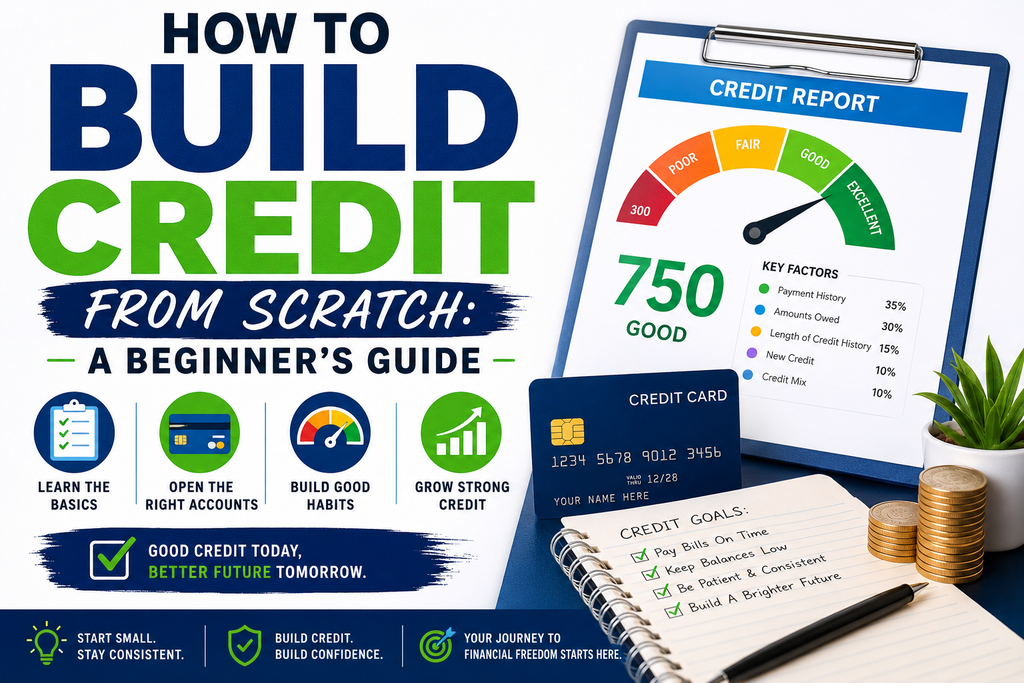
How to Build Credit from Scratch
If you’ve never had a credit card or loan, you may wonder how you’re supposed to build credit when you don’t have a credit history.
Building credit takes time, but there are legitimate ways to begin establishing a credit profile and developing responsible financial habits.
What Does It Mean to Build Credit?
Building credit means establishing a record of how you manage borrowed money and credit accounts.
Credit reports can contain information about your accounts, payment history, balances and other information used by credit-scoring models.
The goal isn’t simply to obtain a high credit score. The bigger objective is to develop a history of responsible credit management.
1. Learn How Credit Works
Before opening an account, understand:
- Interest rates
- Fees
- Minimum payments
- Credit limits
- Payment due dates
- Annual fees
- How balances are reported
Understanding the terms before borrowing can help you make better decisions.
2. Consider a Secured Credit Card
A secured credit card may be an option for someone who has limited or no credit history.
With a secured card, the cardholder typically provides a refundable security deposit that may serve as collateral for the account.
Not every secured card has the same terms, so compare fees, interest rates and reporting practices before applying.
3. Consider Becoming an Authorized User
Another possible way to establish credit is becoming an authorized user on someone else’s credit card.
However, this should only be considered when you completely trust the primary cardholder and understand how the account is managed.
The account’s reporting and the card issuer’s policies can affect whether and how it appears on your credit reports.
4. Make Payments on Time
Once you have a credit account, payment history becomes extremely important.
Create reminders or automatic payments so you don’t accidentally miss due dates.
Never borrow more than you can reasonably repay.
5. Keep Credit Card Balances Manageable
Credit utilization is an important part of many credit-scoring models.
For example, if your credit limit is $1,000 and your balance is $300, your utilization is 30%.
You don’t need to carry a balance to build credit. In fact, paying your credit card balance in full each month, when financially possible, can help you avoid unnecessary interest charges.
6. Don’t Apply for Everything at Once
You don’t need five credit cards to start building credit.
Applying for multiple accounts in a short period can result in multiple hard inquiries and may make managing your finances more difficult.
Start slowly and understand each account before opening another.
7. Monitor Your Credit Reports
Review your credit reports for information that is inaccurate or unfamiliar.
If you identify an error, investigate the appropriate dispute process with the credit reporting company and the company that provided the information.
8. Be Patient
A credit history takes time to develop.
There isn’t a legitimate shortcut that guarantees a particular credit score in a certain number of days.
Focus on consistent behavior:
Borrow responsibly → Pay on time → Monitor your credit → Keep balances manageable → Repeat
Frequently Asked Questions
How long does it take to build credit?
There is no single timeline. It depends on your accounts, payment history, reporting activity and the scoring model being used.
Can I build credit without a credit card?
Yes. Different types of accounts may be reported to credit bureaus, although not every company reports every account.
Do I need to carry a credit-card balance?
No. Carrying a balance isn’t required simply to build credit.
What’s the best first credit card?
There isn’t one card that is best for everyone. Compare fees, interest rates, security deposits, rewards and eligibility requirements.
Final Thoughts
Building credit from scratch is a process rather than a quick fix.
Learn how credit works, start with manageable accounts, make payments on time and develop responsible financial habits.
For more educational information, explore the credit resources available at Financial Money Education.
Disclaimer: This article is general educational information and isn’t personalized financial, legal or credit advice.
Leave a Reply