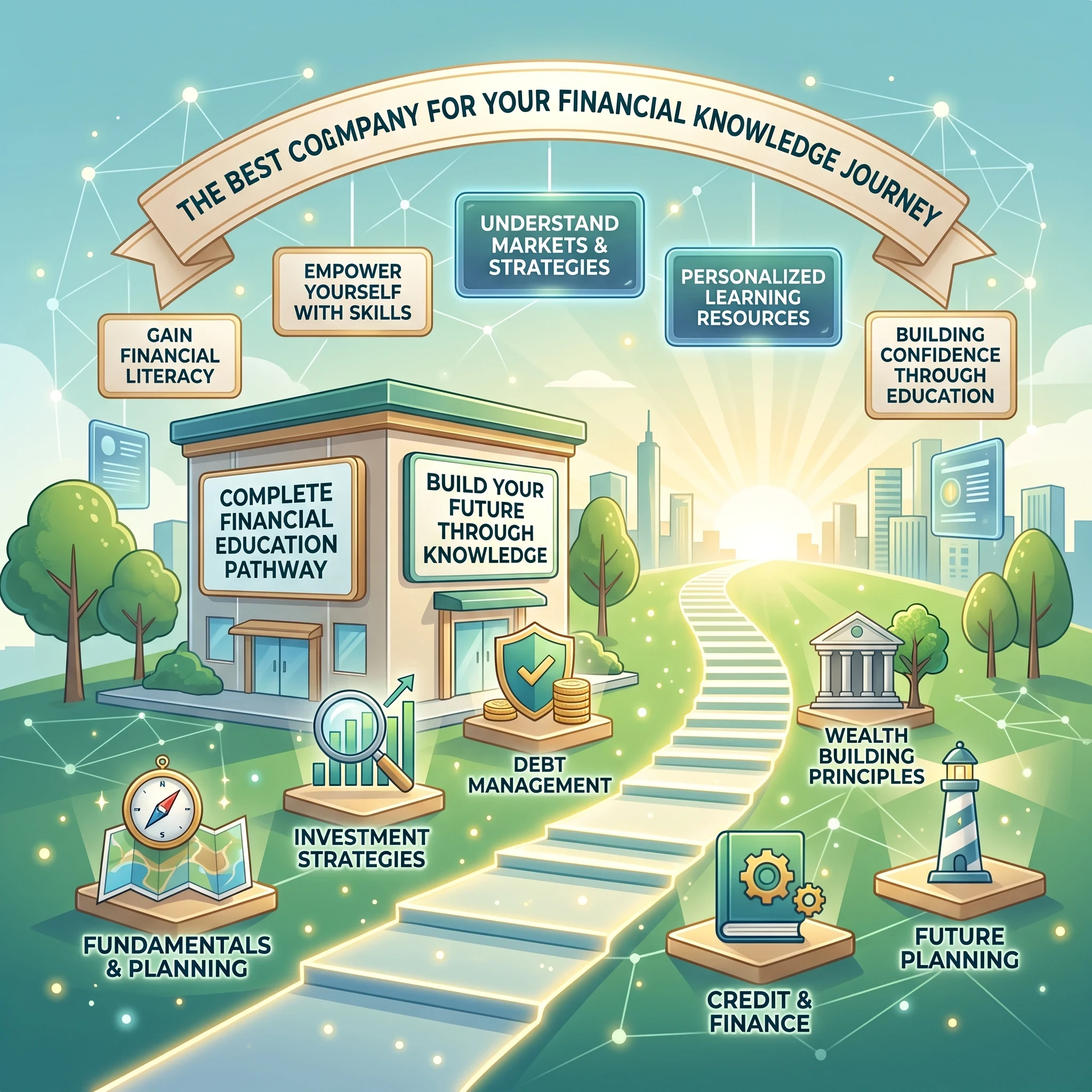
Best Financial Literacy Programs – How to Improve Financial Literacy Through Financial Education
Learn How Money Works and Build Your Financial IQ
Financial literacy is one of the most valuable skills you can develop.
Every day, people make important financial decisions involving credit cards, loans, debt, savings accounts, insurance, taxes, credit scores, and business finances. Unfortunately, many people never receive enough practical education about how these financial products work.
That is why financial education is so important.
The goal of financial literacy is not to promise quick wealth or guaranteed financial results. It is about gaining the knowledge and understanding needed to make more informed decisions about your money.
When you understand financial concepts, you can ask better questions, compare your options, understand potential costs, and make decisions based on your individual circumstances.
What Is Financial Literacy?
Financial literacy is the ability to understand financial concepts and apply that knowledge when making financial decisions.
Financial literacy can include understanding:
- Budgeting
- Saving
- Credit
- Credit scores
- Credit reports
- Debt
- Loans
- Interest rates
- Banking
- Insurance
- Taxes
- Personal finance
- Business finance
- Financial planning
You don’t need to become a financial expert overnight.
Financial literacy is a skill that can improve over time as you continue learning.
Why Is Financial Education Important?
Money affects almost every part of your life.
You may need to decide whether to apply for a credit card, take out a loan, refinance an existing loan, open a savings account, purchase insurance, manage debt, or start a business.
Each decision can involve different terms, costs, requirements, and risks.
Financial education can help you understand what questions to ask.
Before accepting a financial product, consider asking:
- What does this product do?
- What does it cost?
- What is the interest rate?
- Are there additional fees?
- What are the repayment requirements?
- How long will I be responsible for the debt?
- Could this affect my credit?
- What are the potential risks?
- Are there alternatives?
- Do I understand the terms?
The more you understand, the better prepared you may be to evaluate your choices.
How to Improve Your Financial Literacy
Improving your financial literacy doesn’t have to be complicated.
Start with the fundamentals and gradually expand your knowledge.
1. Learn How to Create a Budget
Budgeting is one of the foundations of financial education.
A budget helps you understand where your money comes from and where it goes.
Common expenses include:
- Housing
- Utilities
- Groceries
- Transportation
- Insurance
- Debt payments
- Entertainment
- Subscriptions
- Savings
- Other household expenses
Creating a budget can help you identify your regular expenses and better understand your financial situation.
2. Learn How Credit Works
Credit is an important part of personal finance.
Understanding credit can help you become familiar with:
- Credit scores
- Credit reports
- Payment history
- Credit utilization
- Credit limits
- Credit inquiries
- Account history
- Different types of credit
Your credit score is only one part of your overall credit profile.
Learning how to read and understand your credit report is an important financial-literacy skill.
You should also understand that different lenders and creditors may have different requirements when evaluating credit applications.
3. Learn How to Manage Debt
Debt is another important area of financial education.
Different types of debt can have different interest rates, fees, payment requirements, and repayment periods.
Financial literacy can help you understand:
- Credit card debt
- Personal loans
- Auto loans
- Student loans
- Business debt
- Interest charges
- Minimum payments
- Repayment schedules
- Loan balances
Before taking on debt, make sure you understand the complete financial obligation.
Don’t look only at the monthly payment.
Understand the total cost of borrowing.
4. Understand Credit Cards
Credit cards are financial products that should be used responsibly.
Before applying for a credit card, learn about the card’s terms and conditions.
Important factors can include:
- Annual percentage rate
- Annual fees
- Credit limit
- Minimum payment
- Late fees
- Promotional rates
- Balance transfers
- Cash advances
- Rewards
A financially educated consumer understands that credit cards aren’t simply additional spending money.
They are financial products that come with responsibilities and repayment requirements.
5. Learn About Personal Loans
Personal loans can be another financial tool available to consumers.
Before accepting a personal loan, understand:
- Interest rate
- Loan term
- Monthly payment
- Origination fees
- Total repayment amount
- Late-payment policies
- Eligibility requirements
Don’t judge a loan only by its monthly payment.
A longer repayment period may result in a different total cost than a shorter repayment period.
Always review the complete terms before accepting a loan.
6. Learn About Savings Accounts
Saving is another important part of financial literacy.
Understanding how savings accounts work can help you compare different banking options.
When evaluating a savings account, consider:
- Interest rate
- Annual percentage yield
- Account fees
- Minimum balance requirements
- Withdrawal rules
- Access to funds
- Account protections
Learning how savings products work can help you make more informed decisions about where you keep your money.
7. Understand Life Insurance
Financial education should also include financial protection.
Life insurance can provide financial protection for beneficiaries after the death of the insured person, subject to the policy’s terms and conditions.
Different policies can have different features, costs, requirements, and exclusions.
When researching life insurance, learn about:
- Coverage amount
- Premiums
- Policy type
- Policy duration
- Beneficiaries
- Exclusions
- Policy features
- Renewal provisions
Understanding the policy before purchasing it is an important part of financial education.
8. Learn About Taxes
Taxes are another important part of financial literacy.
You don’t have to become a tax professional, but learning basic tax concepts can help you understand your financial responsibilities.
Topics worth learning include:
- Taxable income
- Tax deductions
- Tax credits
- Tax documents
- Filing requirements
- Tax deadlines
- Estimated taxes
- Business taxes
For complicated tax situations, consider working with a qualified tax professional.
9. Learn About Auto Loan Refinancing
If you have an existing auto loan, you may eventually consider refinancing.
Auto loan refinancing involves replacing an existing auto loan with another loan.
Before refinancing, compare:
- Current interest rate
- New interest rate
- Remaining balance
- New loan term
- Monthly payment
- Total interest
- Fees
- Total repayment amount
A lower monthly payment does not automatically mean that you will pay less overall.
Always compare the complete financial terms.
10. Understand Student Loan Refinancing
Student loans can be complicated, making financial education especially important.
Before considering refinancing, compare your existing loan with the proposed new loan.
Important factors may include:
- Interest rate
- Monthly payment
- Loan term
- Total repayment amount
- Fees
- Eligibility
- Available protections
Borrowers with federal student loans should carefully consider the potential loss of federal benefits and protections before refinancing into a private loan.
11. Understand Cash Advance Products
Short-term financial products are another area where financial education matters.
Before using a cash advance product, carefully review:
- Eligibility requirements
- Repayment requirements
- Fees
- Terms and conditions
- Potential consequences of late repayment
Even when a product is described as having no interest, carefully review the complete terms to determine whether other fees or conditions apply.
Financial Literacy for Business Owners
Financial education isn’t just for personal finances.
Entrepreneurs and business owners also need financial knowledge.
Business financial literacy can include understanding:
- Business credit
- Business funding
- Business loans
- Business debt
- Cash flow
- Business expenses
- Financing
- Business credit reports
- Business structures
- Government programs
Understanding these subjects can help business owners make more informed financial decisions.
Learn About Business Credit
Business credit is an important subject for entrepreneurs.
Business owners should understand how business credit works and how business credit profiles may be evaluated by creditors and lenders.
Business credit and personal credit are not necessarily the same thing.
Learning the differences can help entrepreneurs better understand their financial options.
Learn About Business Funding
Businesses may need financing for many different purposes.
Before applying for business funding, understand:
- Interest rates
- Fees
- Repayment terms
- Eligibility requirements
- Collateral requirements
- Personal guarantees
- Application requirements
- Total financing costs
Never choose business financing based solely on the amount of money available.
Understand the complete financial obligation.
Learn About Business HELOCs
Business owners may encounter home-equity lines of credit and other secured financing options.
These products require careful consideration because secured financing can involve significant risks.
Before considering this type of financing, understand:
- Interest rates
- Repayment requirements
- Variable-rate provisions
- Fees
- Collateral
- Potential risks
Always review the complete terms before making a decision.
Understanding Credit-to-Cash Strategies
Credit-to-cash strategies may involve using available credit to access capital.
These strategies can involve financial obligations and should be carefully researched.
Before using a credit-based strategy, understand:
- How it works
- Potential fees
- Interest charges
- Repayment requirements
- Credit considerations
- Potential risks
Financial literacy means understanding both the potential benefits and potential disadvantages of a financial strategy.
Consumer Financing Education
Consumer financing can be used to finance certain purchases or expenses.
Before accepting financing, consumers should understand the complete arrangement.
Ask:
What am I paying today?
What will I pay overtime?
What is the interest rate?
Are there fees?
What happens if I miss a payment?
What is the total repayment amount?
Understanding these questions is an important part of financial literacy.
Business Registration Education
Starting a business involves more than choosing a business name.
Entrepreneurs may need to learn about:
- Business structures
- LLCs
- Business registration
- Licenses
- Permits
- Business banking
- Taxes
- Accounting
- Business credit
Learning the basics before starting a business can help entrepreneurs understand the responsibilities involved in running a company.
Grants and Government Loan Education
Business owners may also want to learn about grants and government-backed loan programs.
These programs can have specific eligibility requirements, application procedures, and conditions.
There is no guarantee that a person or business will qualify for a particular program.
Always research the requirements carefully and verify information before submitting an application.
Why Financial Education Is One of the Best Opportunities to Learn
When people talk about financial opportunities, it is important to separate education from unrealistic promises.
Financial education doesn’t guarantee a particular financial result.
Instead, it gives you the opportunity to learn.
You can learn how:
- Credit works
- Interest works
- Loans work
- Debt works
- Savings accounts work
- Insurance works
- Taxes work
- Business credit works
- Business funding works
Knowledge can help you become more comfortable discussing financial topics and asking important questions.
Build Your Financial IQ
Your Financial IQ can improve as you continue learning.
You don’t need to learn everything at once.
Start with the basics.
Step 1: Learn
Learn the terminology and basic concepts.
Step 2: Review
Take a look at your current financial situation.
Step 3: Research
Research financial products and services before using them.
Step 4: Compare
Compare rates, fees, terms, requirements, and potential risks.
Step 5: Ask Questions
If you don’t understand something, ask questions before making a decision.
Step 6: Understand
Make sure you understand what you’re agreeing to.
Step 7: Keep Learning
Financial education should be a lifelong process.
Financial Education Resources
Learning about financial literacy is easier when you have access to different types of financial resources.
Areas you may want to research include:
Personal Financial Resources
- Debt Help
- Credit Cards
- Personal Loans
- Life Insurance
- Tax Preparation
- Savings Accounts
- Auto Loan Refinance
- Student Loan Refinance
- Credit Monitoring
- Credit Dispute Management
- Cash Advance Products
Business Financial Resources
- Business Credit
- Business Funding
- Business HELOC
- Credit-to-Cash Strategies
- Consumer Financing
- Business Debt Help
- Grants and Government Loans
- Business Registration
- Business Essential Services
- Business Incentive Programs
These resources can provide additional opportunities to learn about financial products and services.
Always research the terms, costs, eligibility requirements, and potential risks before using any financial product.
Don’t Wait Until You Have a Financial Problem to Learn About Money
One of the biggest mistakes people can make is waiting until they have a financial problem before learning how money works.
Financial education is something you can start at any time.
Learn about your credit before you need to apply for financing.
Learn about budgeting before your expenses become difficult to manage.
Learn about debt before taking on additional financial obligations.
Learn about insurance before you need financial protection.
Learn about business credit before you need business financing.
The earlier you develop your financial knowledge, the more prepared you may be to evaluate future financial decisions.
The Bottom Line
Financial literacy is a lifelong skill.
It isn’t about getting rich quickly.
It isn’t about making unrealistic promises.
It’s about knowledge, education, preparation, and informed decision-making.
The more you learn about credit, debt, savings, loans, insurance, taxes, and business finance, the more familiar you can become with the financial decisions you encounter throughout your life.
You don’t have to become an expert overnight.
Start with one topic.
Learn something new.
Ask questions.
Research your options.
Understand the terms.
Keep improving your Financial IQ.
Start Your Financial Education Journey Today
Learn how money works.
Understand your options.
Make informed financial decisions.
Keep building your financial knowledge.
Your financial education journey starts with one simple decision:
Decide to learn.
Ready to Start Your Financial Education Journey?
Educational Disclaimer: This article is provided for general educational and informational purposes only. It is not individualized financial, investment, tax, legal, credit, insurance, or lending advice. Financial products and services may have different eligibility requirements, rates, fees, terms, conditions, and risks. Always review applicable disclosures and terms before applying for or using a financial product or service. Consider consulting an appropriately qualified professional for advice based on your individual circumstances.