
Financial education is one of the most valuable skills you can develop. Understanding how money works can help you make better financial decisions, avoid unnecessary debt, build good credit, save for emergencies, and work toward your long-term financial goals.
Unfortunately, many people reach adulthood without learning the basics of personal finance. You may know how to earn money, but earning money is only one part of financial success. You also need to understand how to manage, save, borrow, and plan with the money you have.
The good news is that you don’t have to become a financial expert overnight. Financial education starts with learning a few basic principles and developing better money habits over time.
This beginner’s guide will walk you through some of the most important areas of personal finance.
What Is Financial Education?
Financial education is the process of learning how to make informed decisions about your money.
It includes understanding subjects such as:
- Budgeting
- Saving money
- Credit scores
- Credit cards
- Managing debt
- Emergency funds
- Financial goals
- Borrowing money
- Investing basics
- Long-term wealth building
The purpose of financial education isn’t simply to accumulate more money. It’s about learning how to use your financial resources responsibly and make decisions that support your goals.
The more you understand about money, the better prepared you can be when financial decisions arise.
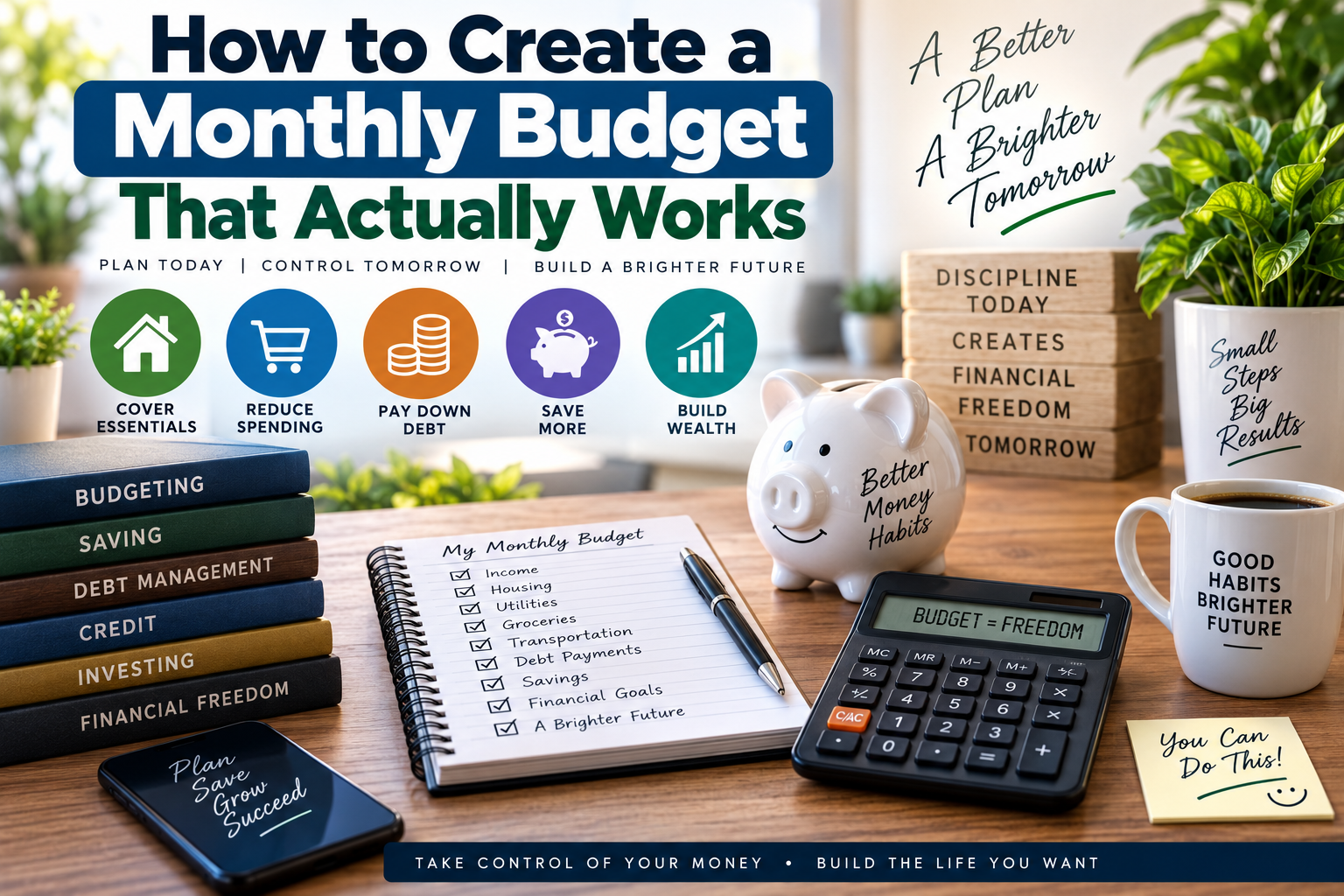
1. Start With a Monthly Budget
One of the first steps toward improving your finances is understanding exactly where your money goes.
A budget gives you a clear picture of your income and expenses.
Start by writing down your monthly income. Then list your regular expenses, including:
- Housing
- Utilities
- Groceries
- Transportation
- Insurance
- Minimum debt payments
- Phone and internet
- Subscriptions
- Entertainment
- Savings
Once you have everything written down, compare your income with your expenses.
If you’re spending more than you earn, look for expenses that can be reduced or eliminated.
Even small changes can make a difference.
Internal link opportunity: Link this section to your future article “How to Create a Monthly Budget That Actually Works.”
2. Learn How Credit Works
Credit is another important part of financial education.
Your credit history can affect your ability to qualify for certain loans, credit cards, housing, and other financial products.
Your credit score is generally influenced by factors such as your payment history, amounts owed, length of credit history, new credit activity, and the types of credit accounts you have.
Developing responsible credit habits can include:
- Paying bills on time
- Keeping credit card balances manageable
- Avoiding unnecessary credit applications
- Monitoring your credit reports
- Borrowing only what you can reasonably repay
Building credit takes time. There is no legitimate shortcut that guarantees a particular credit-score increase.
Internal link opportunity: Link to “How to Build Credit From Scratch: A Beginner’s Guide.”
3. Understand Your Credit Score
Your credit score is designed to help lenders evaluate credit risk.
A higher score can sometimes make it easier to qualify for favorable borrowing terms, although lenders consider other factors as well.
One of the most important financial habits you can develop is paying your bills by their due dates.
Late or missed payments can potentially hurt your credit history.
You should also periodically review your credit reports and check for information that may be inaccurate.
Internal link opportunity: Link to “What Is a Credit Score and Why Is It Important?”
You can also link to “How to Improve Your Credit Score Step by Step.”
4. Build an Emergency Fund
Unexpected expenses are part of life.
A vehicle may need repairs. An appliance may break. Work hours could be reduced. An unexpected medical expense could appear.
Without savings, these situations can push people toward credit cards or loans.
That’s why an emergency fund can be so valuable.
You don’t necessarily need thousands of dollars to begin.
Start with an achievable goal, such as:
$250 → $500 → $1,000 → one month of essential expenses
Then continue building your emergency savings based on your personal situation.
Consistency matters more than starting with a large amount.
Internal link opportunity: Link to “How to Build an Emergency Fund When Money Is Tight.”
5. Develop Better Saving Habits
Saving money becomes easier when you treat it as part of your regular financial routine rather than something you do only when money is left over.
Consider automatically transferring a portion of each paycheck into savings.
The amount doesn’t have to be huge.
For example, consistently saving $10, $25, or $50 at a time can help establish the habit.
You can also look for everyday opportunities to reduce spending, such as reviewing subscriptions, comparing insurance or service costs, planning meals, and reducing impulse purchases.
Internal link opportunity: Link to “How to Save Money Every Month: 15 Simple Money-Saving Tips.”
6. Create a Plan for Paying Down Debt
Debt can become difficult to manage when several payments compete for your income every month.
Start by listing each debt along with its:
- Balance
- Interest rate
- Minimum payment
- Due date
Then choose a repayment strategy.
Two popular approaches are the debt snowball and debt avalanche.
With the debt snowball, you focus additional payments on your smallest balance first while continuing minimum payments on your other debts.
With the debt avalanche, you generally focus extra money on the debt with the highest interest rate first.
Both approaches have advantages. The important thing is finding a realistic strategy you can consistently follow.
Internal link opportunity: Link to “How to Get Out of Debt and Take Control of Your Finances.”
7. Understand Good Debt vs. Bad Debt
Not all debt works the same way.
Instead of assuming that all borrowing is automatically good or bad, consider the cost, purpose, terms, and your ability to repay it.
Borrowing that helps finance an asset, education, or another productive purpose may sometimes support a larger financial goal. However, even potentially useful debt can become harmful if the payments are unaffordable or the borrowing costs are excessive.
High-interest debt used for unnecessary purchases can be especially difficult because interest charges may make the original purchase significantly more expensive.
Before borrowing money, ask yourself:
Do I really need to borrow this money, what will it cost me, and can I comfortably afford the payments?
Internal link opportunity: Link to “Good Debt vs. Bad Debt: What’s the Difference?”
8. Set Clear Financial Goals
Financial goals give your money a purpose.
Instead of simply saying:
“I want to save more money.”
Create a specific goal:
“I want to save $1,000 for emergencies over the next 10 months.”
That gives you a measurable target of approximately $100 per month.
Your financial goals might include:
- Paying off a credit card
- Building an emergency fund
- Saving for a home
- Buying a reliable vehicle
- Starting a business
- Saving for retirement
- Building long-term investments
Break larger goals into smaller milestones so you can track your progress.
Internal link opportunity: Link to “How to Set Financial Goals and Actually Reach Them.”
9. Start Learning About Wealth Building
Building wealth usually doesn’t happen overnight.
For most people, it is a long-term process involving a combination of earning, controlling spending, saving, managing debt, owning assets, and investing appropriately.
An important concept to understand is compound growth.
When investments generate returns and those returns remain invested, future returns can potentially be earned on both the original amount and previous gains.
However, investing involves risk, and returns aren’t guaranteed. Learn about risk, diversification, fees, taxes, and your time horizon before making investment decisions.
Internal link opportunity: Link to “How to Start Building Wealth for Your Future.”
10. Avoid Common Financial Mistakes
Financial education also means learning what not to do.
Common mistakes can include:
- Spending without a budget
- Frequently making impulse purchases
- Missing bill payments
- Carrying expensive debt without a repayment plan
- Not having emergency savings
- Ignoring your credit reports
- Borrowing without understanding the terms
- Failing to plan for long-term goals
- Falling for financial offers that sound too good to be true
You don’t need perfect finances to start improving.
Recognizing where changes are needed is an important first step.
Internal link opportunity: Link to “Financial Mistakes to Avoid: 10 Habits That Can Hurt Your Finances.”
Building Better Money Habits Starts With Education
Financial success isn’t determined by one decision. It is usually built through many small decisions made consistently over time.
Start with the basics.
Create a budget. Understand your credit. Build emergency savings. Develop a debt repayment strategy. Set financial goals. Learn about investing and wealth building.
Most importantly, continue educating yourself.
The more you understand about your finances, the better equipped you can be to make informed decisions and work toward the financial future you want.
Continue Your Financial Education
Explore our other financial education guides:
- How to Create a Monthly Budget That Actually Works
- How to Build Credit From Scratch
- How to Improve Your Credit Score
- What Is a Credit Score and Why Is It Important?
- How to Get Out of Debt
- How to Build an Emergency Fund
- How to Save Money Every Month
- Good Debt vs. Bad Debt
- How to Start Building Wealth
- How to Set Financial Goals
Use these guides together to continue building your financial knowledge one step at a time.
This article is for general educational purposes and is not individualized financial, investment, tax, or legal advice.
Leave a Reply