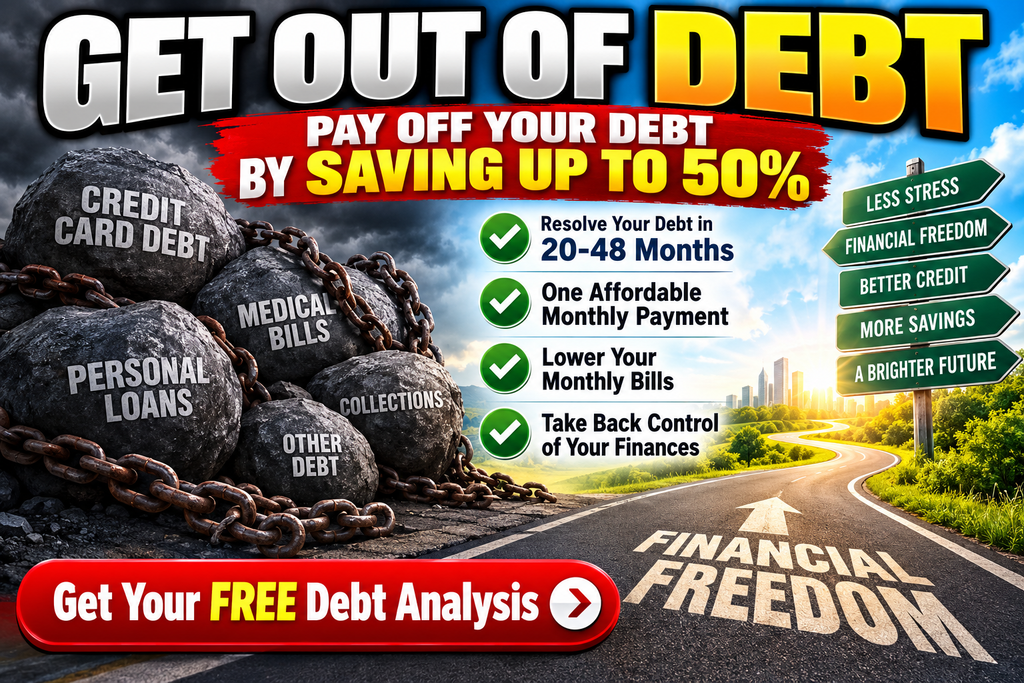
Debt can become overwhelming quickly.
You may start with one credit card, then another unexpected expense comes along. Maybe you need a personal loan to cover an emergency, medical bills begin piling up, or rising everyday expenses make it harder to keep up with your monthly payments.
Before long, you could find yourself sending hundreds—or even thousands—of dollars toward debt every month while watching your balances barely move.
If that sounds familiar, there may be another option.
A structured debt resolution program may help qualifying consumers address eligible unsecured debts, potentially reduce the amount required to resolve those debts, and work toward becoming debt-free within a defined period.
Depending on your individual circumstances and the program available to you, you may be able to work toward resolving qualifying debts in approximately 20–48 months.
Some consumers may also be able to resolve certain enrolled debts for substantially less than the original balances. However, results vary, creditors are not required to settle, and savings or completion times cannot be guaranteed.
The first step is understanding your situation.
Get Your FREE Debt Analysis
Before deciding what to do about your debt, find out what options may be available to you.
A FREE Debt Analysis can help you review your current financial situation, qualifying debts, monthly payments and potential strategies for getting your finances back under control.
There is no reason to continue guessing about your options.
Get your FREE Debt Analysis today and discover whether a debt resolution strategy could work for you.
Are You Tired of Struggling With Debt Every Month?
Living with large amounts of debt isn’t just about owing money.
It can affect nearly every part of your financial life.
You receive your paycheck, pay the mortgage or rent, utilities, insurance, groceries and other necessities—and then the credit card bills arrive.
You make the minimum payments.
Another month passes.
Then you look at the balances and wonder:
Why do I still owe so much money?
One major reason is interest.
When you’re carrying high-interest credit card debt, a portion of every payment may go toward interest rather than significantly reducing your principal balance.
If you continue making only minimum payments, getting out of debt can potentially take years.
That’s why developing a real debt payoff strategy is so important.
Stop Ignoring Your Debt and Start Building a Plan
Debt usually doesn’t disappear by itself.
The longer high-interest debt remains unpaid, the more difficult it may become to manage.
Instead of hoping your financial situation improves, start by getting a clear picture of exactly where you stand.
Write down every debt you owe, including:
Credit cards, personal loans, medical bills, collection accounts and other unsecured debts.
For each account, identify your:
Current balance
Interest rate
Minimum monthly payment
Payment due date
Account status
Once you have this information, calculate the total amount you owe.
The number might be uncomfortable to see, but knowing the truth about your financial situation gives you something extremely valuable:
A starting point.
You can then begin evaluating the best strategy for moving forward.
How Can a Debt Resolution Program Work?
Debt resolution is different from simply making minimum payments on your accounts.
Depending on the program, you typically work toward accumulating funds that can eventually be used to negotiate settlements with participating creditors.
When sufficient funds are available, negotiations may be attempted with creditors to settle qualifying debts.
For example, suppose someone has several qualifying unsecured accounts.
Rather than continuing without a clear strategy, that person could enter a structured program designed to address those enrolled debts over time.
If a creditor agrees to accept a negotiated amount, the account may potentially be resolved for less than its outstanding balance.
However, creditors are not required to negotiate or accept settlement offers, and the results will vary from one person and creditor to another.
That distinction is extremely important.
A legitimate debt resolution program should explain both the potential benefits and the risks before you enroll.
Could You Really Save Up to 50% on Your Debt?
You may see debt-relief advertisements saying consumers can save up to 50% on their debts.
It is important to understand exactly what this means.
Debt settlement companies may sometimes negotiate settlements that are significantly below the enrolled account balance. However, your actual savings will depend on factors including your creditors, balances, negotiations, program fees and individual financial circumstances.
There is also an important difference between a settlement reduction and your net savings after fees and other costs.
Therefore, you should never assume that enrolling in a program automatically means that your total cost will be reduced by 50%.
Instead, ask:
How are the advertised savings calculated?
Are program fees included?
Which debts qualify?
What happens if a creditor refuses to settle?
What is the estimated total cost of the program?
These questions will help you make a better-informed financial decision.
Resolve Your Debt in Approximately 20–48 Months
Another major advantage promoted by many structured debt resolution programs is having a target timeline.
Instead of continuing to make minimum payments without knowing when your debt will finally disappear, qualifying consumers may be presented with a program designed to address enrolled debts within approximately 20–48 months.
Your actual timeline can depend on:
The amount of debt enrolled, your monthly program contribution, settlements reached with creditors, creditor participation, program fees and whether you successfully complete the program.
There is no guarantee that every person will become debt-free within 20–48 months.
However, having a structured strategy can give you something that simply making random payments may not provide:
A financial goal and a plan for pursuing it.
One Affordable Monthly Payment or Program Deposit
Managing multiple debts can become confusing.
Imagine having six credit cards.
One payment is due on the 5th.
Another is due on the 11th.
Two more are due around the 20th.
Another account has a different minimum payment every month.
Trying to keep track of everything can become stressful.
Depending on how a debt resolution program is structured, you may make one regular monthly program deposit rather than trying to independently manage a complicated debt resolution strategy yourself.
This can make your financial plan easier to understand.
However, debt settlement programs are not the same as traditional consolidation loans. In many settlement programs, funds are accumulated for future settlements rather than immediately being distributed as normal monthly payments to creditors.
Make sure you understand exactly how your particular program works before enrolling.
What Types of Debt Can Potentially Be Included?
Debt resolution programs generally focus on unsecured debt.
Qualifying debts may include certain:
Credit card debts
Credit cards are one of the most common forms of unsecured debt and can become difficult to pay off when interest rates are high.
Personal loans
Some unsecured personal loans may potentially qualify.
Medical bills
Certain unpaid medical debts may be eligible depending on the program and creditor.
Collection accounts
Some debts that have entered collections may also potentially qualify.
Other types of unsecured obligations may qualify as well.
However, not every debt can be handled through debt settlement.
Mortgages, auto loans and other debts secured by property are generally treated differently. Federal student loans and tax obligations also have their own rules and programs.
Your FREE Debt Analysis can help determine which debts may qualify.
Why Minimum Payments Can Keep You in Debt
One of the biggest mistakes people make with credit cards is assuming that making the minimum payment means they are making substantial progress.
The minimum payment keeps the account moving, but it may not eliminate the debt quickly.
Consider a person carrying a large balance on a high-interest credit card.
Every month, interest is added.
The person makes a payment.
Part of that payment covers interest.
Only the remaining portion reduces the principal.
If that person continues using the card while making minimum payments, the balance could remain high for a very long time.
This is why your goal should not simply be:
“How can I make this month’s payment?”
A better question is:
“What strategy can help me eliminate this debt?”
That shift in thinking can make a major difference.
Step 1: Stop Adding New Debt
Getting out of debt becomes extremely difficult if you continue creating new debt.
Before developing your payoff strategy, examine why you’re using credit.
Are you using credit cards for emergencies?
Groceries?
Entertainment?
Bills?
Expenses your income doesn’t cover?
Understanding why the debt accumulated can help prevent the same problem from happening again.
If possible, begin transitioning toward spending money you already have instead of relying on available credit.
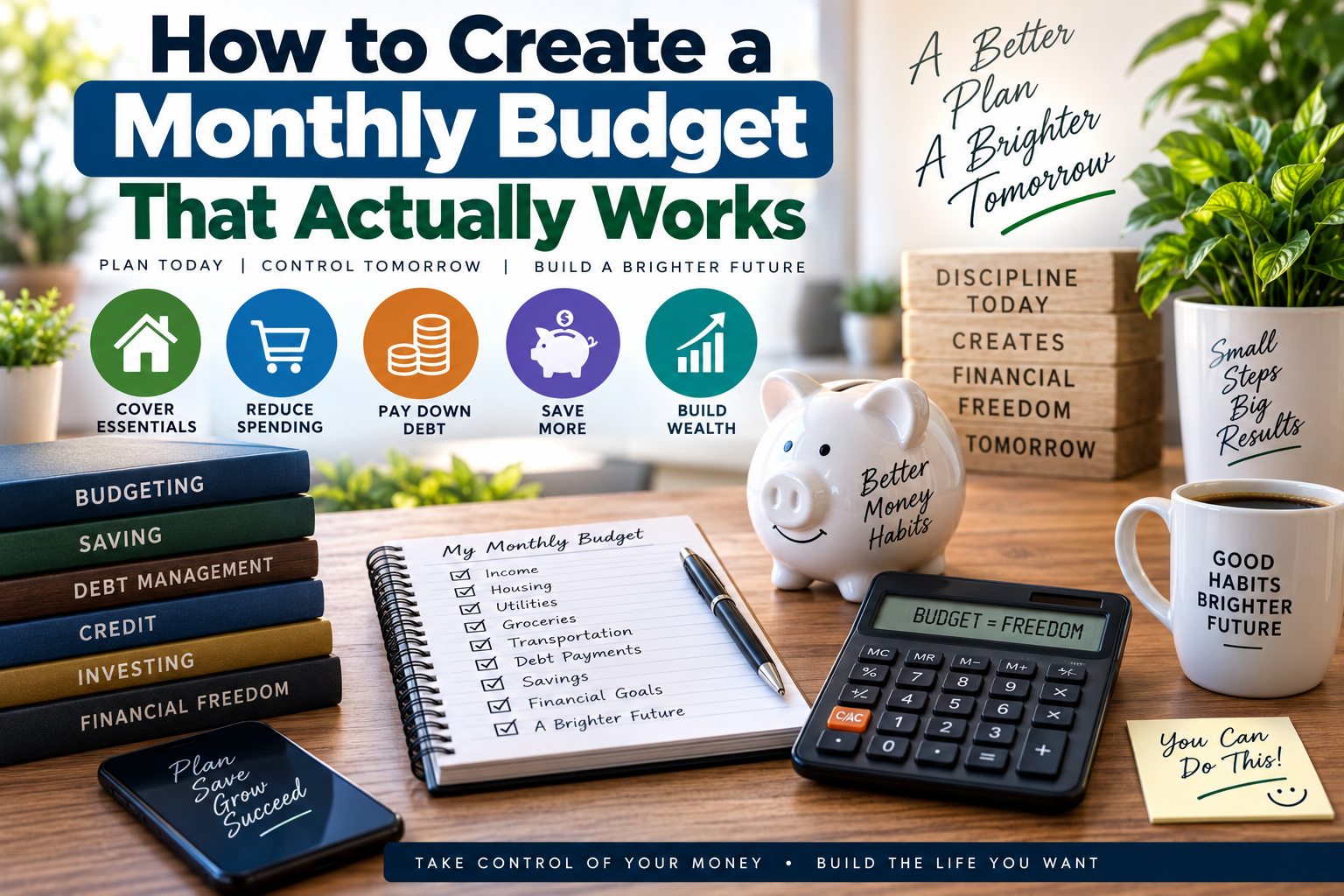
Step 2: Create a Realistic Monthly Budget
A budget isn’t about punishing yourself.
It’s about telling your money where you want it to go.
Start with your monthly income.
Then subtract your essential expenses, including:
Housing, utilities, food, transportation, insurance and necessary household expenses.
Next, examine discretionary spending.
You may discover opportunities to reduce spending on subscriptions, restaurant meals, entertainment, shopping or services you rarely use.
Even finding an extra $100, $200 or $300 per month can make a meaningful difference when that money is redirected toward your financial goals.
Step 3: Build a Small Emergency Fund
This may sound strange when your goal is paying off debt.
Why save money instead of immediately sending every extra dollar to creditors?
Because unexpected expenses happen.
Your car breaks down.
A home appliance stops working.
You receive an unexpected bill.
Without emergency savings, you may have no choice but to put the expense back onto a credit card.
Then you’re creating new debt while trying to eliminate old debt.
Building an emergency cushion can help break that cycle.
Step 4: Compare Your Debt Relief Options
Debt resolution isn’t the only possible solution.
Depending on your situation, you may want to compare several strategies.
Debt Snowball
The debt snowball method focuses on paying off your smallest balance first while maintaining required payments on other debts.
Once the smallest debt is eliminated, you redirect that payment toward the next balance.
The psychological benefit is seeing accounts disappear relatively quickly.
Debt Avalanche
The debt avalanche focuses on your highest-interest debt first.
Mathematically, this approach may reduce the amount of interest you pay compared with prioritizing smaller balances.
Debt Consolidation
A debt consolidation loan combines multiple debts into one new loan.
If you qualify for a lower interest rate, consolidation could potentially simplify your payments and reduce interest costs.
However, approval and terms depend on your credit profile and financial circumstances.
Credit Counseling
Nonprofit credit counseling organizations may offer budgeting assistance and debt-management plans.
Under certain plans, creditors may agree to reduced interest rates or other concessions.
Debt Resolution
Debt resolution or settlement focuses on attempting to negotiate qualifying unsecured debts for less than the balances owed.
It can be appropriate in some situations, particularly when someone is experiencing genuine financial hardship and cannot realistically repay unsecured debts under their existing terms.
But it also carries risks.
Understand the Risks of Debt Resolution
Before enrolling in any debt settlement program, understand the potential disadvantages.
Settlement programs can negatively affect your credit.
Creditors may continue collection efforts while accounts remain unresolved.
Late fees and interest could continue accumulating.
Creditors are not required to negotiate.
Collection lawsuits are possible.
Program fees may apply.
Forgiven debt may sometimes be considered taxable income.
Not every enrolled debt will necessarily settle on favorable terms.
This is why you should carefully compare debt resolution with alternatives before making a decision.
What Happens After You Become Debt-Free?
Getting out of debt shouldn’t be the end of your financial journey.
It should be the beginning of your next chapter.
Once you are no longer directing a significant portion of your income toward old debt, consider redirecting that money toward building your financial future.
Your priorities could include:
Building a larger emergency fund.
Improving your credit habits.
Saving for retirement.
Creating short- and long-term savings goals.
Investing for your future.
Saving for a home.
Building additional sources of income.
Instead of paying for your past, you can begin using more of your money to build your future.
Build Better Credit Habits Going Forward
Becoming debt-free is powerful, but staying out of unnecessary debt is just as important.
Develop habits that support long-term financial health.
Pay bills on time.
Keep credit card balances manageable.
Avoid applying for unnecessary credit.
Review your credit reports regularly.
Build emergency savings.
Create a monthly budget.
Save before making large purchases whenever possible.
The goal isn’t simply to have a better credit score.
The goal is to create a stronger overall financial foundation.
Imagine Your Life With Less Debt
Think about what your finances could look like without overwhelming unsecured debt.
Imagine opening your bank account without worrying about five or six different credit card payments.
Imagine being able to put money into savings instead of constantly sending it toward high-interest balances.
Imagine having an emergency fund.
Imagine being able to plan for retirement, investments, a home, a business or other goals that matter to you.
Getting there may take time.
But every financial journey begins with a decision to change direction.
Get Your FREE Debt Analysis Today
If you’re struggling with credit cards, personal loans, medical bills or other qualifying unsecured debts, don’t assume that making minimum payments forever is your only option.
Find out what solutions may be available for your situation.
With your FREE Debt Analysis, you can explore your current debt situation and determine whether you may qualify for a structured debt resolution program.
Depending on your circumstances, a program may help you:
Potentially resolve qualifying debts for less than the balances owed
Work toward resolving enrolled debt within approximately 20–48 months
Follow one structured monthly program contribution
Create a clearer strategy for becoming debt-free
Start rebuilding your financial future
Take the First Step Toward Financial Freedom
You don’t have to keep wondering how you’re going to get out of debt.
Learn about your options.
Create a plan.
Start taking action.
Get Your FREE Debt Analysis Today and Find Out What Debt Relief Options May Be Available to You.
Your financial situation didn’t develop overnight, and changing it may take time.
But taking one step today could put you on a better financial path tomorrow.
Frequently Asked Questions About Getting Out of Debt
Can I Really Reduce My Debt by 50%?
Some debt settlement negotiations can result in creditors accepting substantially less than the outstanding balance. However, a 50% reduction should not be considered guaranteed. Actual settlement amounts, fees and total savings vary considerably.
How Long Does Debt Resolution Take?
Some programs are designed around approximately 20–48 months, but actual completion times depend on the consumer’s debts, monthly contributions, creditors, successful negotiations and other circumstances.
Will Debt Settlement Hurt My Credit?
It can. Accounts that become delinquent and debts settled for less than the full balance can negatively affect your credit. Consider this potential impact before enrolling.
Is Debt Resolution the Same as Debt Consolidation?
No. Debt consolidation generally involves obtaining a new loan to repay multiple existing debts. Debt resolution typically involves attempting to negotiate eligible debts for less than the amount owed.
What Debts May Qualify?
Certain credit cards, unsecured personal loans, medical bills and other unsecured debts may qualify. Eligibility varies.
How Do I Know Which Option Is Best for Me?
Your financial situation is unique. Comparing debt settlement, consolidation, credit counseling, accelerated repayment and other available strategies can help you make an informed decision.
Start With Your FREE Debt Analysis
If you’re ready to stop guessing and start developing a strategy, begin by finding out what options are available.
Get Your FREE Debt Analysis today.
Learn what you owe, understand your options and start building your path toward a stronger financial future.
Disclosure: This article is for general educational and marketing purposes and is not financial, legal, tax or credit advice. Debt settlement and resolution results vary. Creditors are not required to negotiate or accept settlement offers. Savings percentages, monthly payment reductions and completion timelines are not guaranteed. Debt settlement may negatively affect credit, fees may apply, and forgiven debt may have tax consequences. Review the specific program’s disclosures, fees, eligibility requirements and alternatives before enrolling.
Leave a Reply