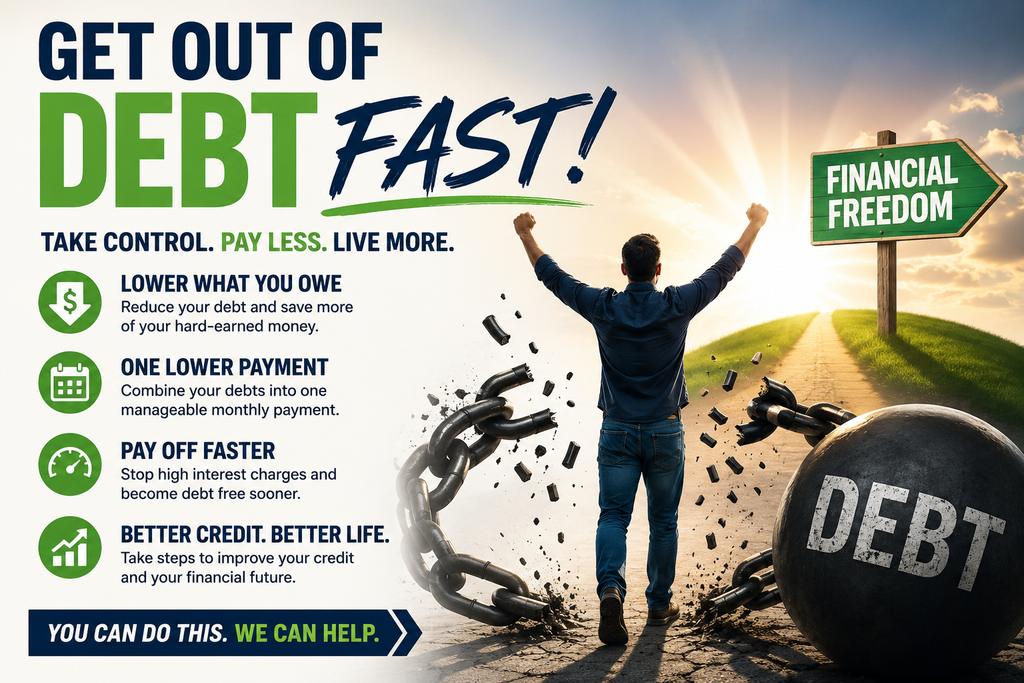
How to Get Out of Debt, Pay Off Debt Faster, Reduce Monthly Payments, and Fix Your Credit
Are you struggling to pay your bills every month? Do you feel like you’re making payments, but your debt never seems to go away? Are high-interest credit cards, personal loans, medical bills, and other debts making it difficult to get ahead financially?
If so, you’re not alone.
Millions of people struggle with debt and the financial stress that comes with having multiple monthly payments. When interest charges continue to build and minimum payments consume a large portion of your income, it can feel almost impossible to get ahead.
But there are steps you can take to better understand your financial situation and explore solutions that may help you manage your debt, reduce financial stress, pay off debt faster, and work toward improving your credit.
Our financial education and debt-help program is designed to help people learn more about their financial options and understand strategies that may help them take control of their debt.
Whether you’re dealing with credit card debt, personal loans, medical bills, or other eligible unsecured debts, learning about your options could be an important first step toward creating a better financial future.
Are You Struggling to Pay Your Monthly Bills?
Debt can become overwhelming when you have several bills arriving at different times throughout the month.
You may have:
- Multiple credit card payments
- Personal loans
- Medical bills
- High-interest debt
- Collection accounts
- Monthly subscription expenses
- Auto-related expenses
- Household bills
- Other financial obligations
Even if you’re making your minimum payments, you may feel like you’re not making enough progress.
High interest rates can make this problem even worse. When a significant portion of your payment goes toward interest, it can take much longer to pay down the actual balance.
That’s why understanding your debt and learning about available solutions is so important.
Instead of continuing to struggle without a plan, you can start learning about ways to organize your finances and determine which strategies may be appropriate for your situation.
How Can I Get Out of Debt?
One of the most common financial questions people ask is:
“How can I get out of debt when I can barely afford my monthly payments?“
There isn’t one solution that works for everyone. Your best option depends on your income, expenses, types of debt, balances, interest rates, credit history, and other circumstances.
However, there are several strategies people commonly explore when trying to become debt-free.
These can include:
- Creating a realistic budget
- Paying more than the minimum when possible
- Prioritizing high-interest debt
- Debt consolidation
- Debt management programs
- Debt settlement programs
- Negotiating eligible debts
- Credit counseling
- Financial education
- Building better money-management habits
The important thing is to understand how each option works before making a decision.
Learn How to Pay Off Debt Faster
If your goal is to pay off debt faster, understanding where your money is going is one of the most important places to start.
Many people only look at the minimum payment without considering how much interest they may pay over time.
For example, a credit card with a high interest rate can take years to pay off if you’re only making minimum payments.
Learning how interest works can help you understand why reducing high-interest debt can be such an important part of a long-term financial strategy.
Create a Debt Payoff Plan
Start by making a list of your debts.
Write down:
- Creditor
- Current balance
- Interest rate
- Minimum payment
- Due date
- Type of debt
Once you know exactly what you owe, you can begin evaluating your options.
Some people use the debt avalanche method, which focuses on paying off the highest-interest debt first.
Others prefer the debt snowball method, which focuses on paying off the smallest balance first to create momentum.
The right approach depends on your financial situation and personal preferences.
Could Debt Consolidation Help Simplify Your Payments?
If you’re making several payments every month, debt consolidation may be an option worth learning about.
Debt consolidation generally involves combining multiple eligible debts into one account or payment arrangement.
Instead of keeping track of several separate payments, you may be able to manage your eligible debts through a single monthly payment.
Depending on the program and your circumstances, consolidation or another debt-management strategy may potentially:
- Simplify your monthly payments
- Make budgeting easier
- Reduce your monthly payment
- Lower certain interest costs
- Provide a structured repayment plan
- Help you create a clearer path toward becoming debt-free
However, not everyone qualifies, and not every debt can necessarily be included.
That’s why it is important to understand the specific terms and conditions of any program before enrolling.
Can I Have One Lower Monthly Payment for My Debts?
This is one of the biggest questions people have when they are struggling financially.
“Can I replace multiple debt payments with one lower monthly payment?”
Depending on your circumstances and eligibility, some debt programs may allow multiple qualifying debts to be addressed through one monthly payment.
For someone struggling to manage several bills, having one payment may make monthly budgeting easier.
A lower payment could also potentially free up money in your monthly budget for essential expenses.
However, a lower monthly payment does not necessarily mean you will pay less overall. Some programs may extend the repayment period or have fees and other costs.
Always review the complete terms of a program before making a decision.
Our goal is to help you become more educated about your financial options so you can make an informed decision based on your circumstances.
What Types of Debt May Be Eligible?
The debts that can be included in a debt-management or debt-relief strategy depend on the specific program.
Some programs may work with certain types of unsecured debt, such as:
- Credit cards
- Personal loans
- Medical debt
- Certain lines of credit
- Other qualifying unsecured debts
Secured debts, such as mortgages and many auto loans, generally work differently because they are connected to collateral.
Because every financial situation is different, eligibility should always be determined through an individual review.
How to Reduce What You Owe
If you are searching for how to reduce debt, it’s important to understand that there are different strategies for addressing debt.
Depending on the program, some approaches may focus on:
- Reducing interest costs
- Negotiating eligible balances
- Creating structured repayment plans
- Consolidating qualifying debts
- Improving budgeting
- Increasing financial education
Some debt-relief programs may negotiate with creditors on behalf of consumers. If you’re considering this type of program, understand that debt settlement can have risks, including potential credit damage, fees, tax consequences in some circumstances, and collection activity.
There is no guarantee that a creditor will agree to reduce a debt.
The best solution depends on your individual financial situation.
Don’t Ignore Your Debt
One of the worst things you can do when you’re struggling financially is ignore the problem.
Ignoring debt doesn’t make it disappear.
Late payments may lead to:
- Additional fees
- Increased financial stress
- Collection activity
- Damage to your credit history
- Higher borrowing costs
- Difficulty qualifying for future credit
The sooner you understand your situation, the sooner you can begin exploring possible solutions.
Even if you feel overwhelmed today, taking the first step toward financial education can help you better understand what you can do next.
How Debt Can Affect Your Credit Score
Debt and credit are closely connected.
Your credit reports contain information about your borrowing and payment history. Credit scoring models consider several factors when calculating a credit score.
Important factors can include:
- Payment history
- Credit utilization
- Length of credit history
- New credit
- Credit mix
One of the most important things you can do is make payments on time.
If you’re using a large percentage of your available revolving credit, your credit utilization may also be an important factor.
That’s why learning how to manage credit responsibly can be an important part of improving your overall financial health.
How to Fix Your Credit
If you’re searching for how to fix your credit, the first thing to understand is that there is no legitimate shortcut that can guarantee a specific credit score.
Improving credit generally takes time and consistent financial habits.
A good credit-improvement strategy may include:
Review Your Credit Reports
Review your credit reports regularly and look for information that may be inaccurate, incomplete, outdated, or otherwise questionable.
If you find information you believe is inaccurate, you generally have the right to dispute it with the appropriate credit reporting agency or furnisher.
Pay Bills on Time
Payment history is an important component of many credit scoring models.
Establishing a consistent record of on-time payments can help you build healthier credit habits.
Manage Credit Card Balances
High credit utilization can negatively affect credit scores.
Reducing revolving balances and avoiding unnecessary increases in credit card debt may help you manage your credit more effectively.
Avoid Applying for Too Much Credit
Opening multiple new credit accounts in a short period can affect your credit profile.
Only apply for credit when it makes sense for your financial situation.
Monitor Your Credit
Regularly reviewing your credit reports can help you stay informed and identify potential errors or suspicious activity.
Credit Repair Starts With Credit Education
Many people search for credit repair services because they want to improve their credit but don’t understand how the process works.
Education is an important part of the solution.
You should understand:
- What’s on your credit reports
- How credit scores work
- What affects your credit score
- How credit utilization works
- How payment history affects credit
- How to dispute inaccurate information
- How to establish better financial habits
- How debt affects your overall financial picture
The goal isn’t simply to increase a number.
The goal is to become financially educated so you can make smarter decisions with credit and money in the future.
Why Financial Education Matters
Financial education can give you the knowledge you need to make more informed decisions.
Unfortunately, many people never learn important financial concepts in school.
They may graduate knowing how to solve mathematical equations but never learn:
- How credit scores work
- How interest rates affect debt
- How to read a credit report
- How to create a budget
- How to manage credit cards
- How debt consolidation works
- How business credit works
- How to plan for financial goals
Our program focuses on helping people become more financially educated so they can better understand their choices.
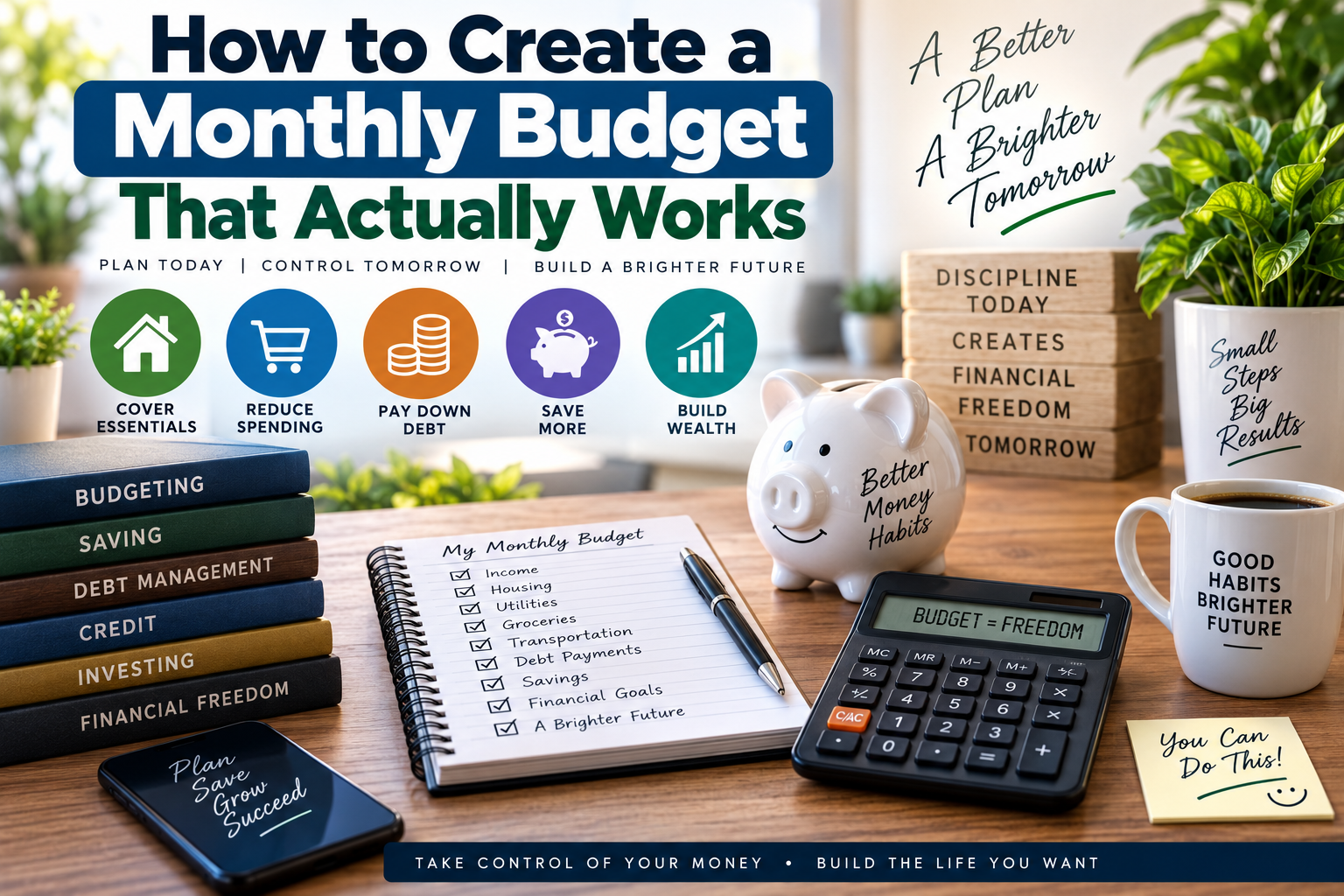
Build a Budget That Works for You
Getting out of debt requires more than simply finding a debt solution.
You also need to understand your monthly cash flow.
Start by writing down your monthly income and expenses.
Essential expenses may include:
- Housing
- Utilities
- Food
- Transportation
- Insurance
- Healthcare
- Minimum debt payments
Then look at your nonessential expenses.
You may discover areas where you can reduce spending and redirect money toward your financial goals.
Even small changes can become meaningful when maintained consistently.
What If I Have a Lot of Debt?
If you’re asking:
“How can I get out of debt when I owe a lot of money?”
Don’t assume that your situation is hopeless.
The first step is to determine exactly how much you owe and what types of debt you have.
Then you can begin learning about your potential options.
Depending on your situation, you may want to explore:
- Debt consolidation
- Credit counseling
- Debt management
- Debt settlement
- Budget restructuring
- Financial education
- Increasing income
- Reducing unnecessary expenses
A professional financial review can help you understand which options may be appropriate.
How to Get Out of Credit Card Debt
Credit card debt can be particularly difficult because of high interest rates.
If you are only making minimum payments, your balance may take a long time to decrease.
Consider creating a strategy that includes:
Step 1: Stop unnecessary credit card spending.
Step 2: Determine the total balance on each card.
Step 3: Identify the interest rate on each account.
Step 4: Determine how much you can realistically pay each month.
Step 5: Explore whether consolidation or another debt solution may be appropriate.
Step 6: Continue developing better financial habits.
The goal is to stop the cycle of borrowing and create a sustainable plan.
Don’t Just Pay Your Bills—Understand Your Money
Paying bills is necessary, but financial education goes much deeper.
When you understand how money works, you can make better decisions about:
- Credit
- Debt
- Saving
- Spending
- Interest
- Loans
- Business finances
- Financial goals
Knowledge can give you greater confidence when making financial decisions.
That’s why our program focuses not only on debt but also on financial education.
Your Credit and Your Financial Future
Your credit can affect many areas of your financial life.
Credit may be considered when applying for:
- Loans
- Credit cards
- Auto financing
- Mortgages
- Certain financial products
- Some rental applications
While credit isn’t the only factor lenders consider, maintaining healthy credit habits can help put you in a stronger financial position.
That’s why learning how to manage debt and credit responsibly can be so important.
Take the First Step Today
If you’re tired of struggling with debt, you’re not alone.
You don’t have to continue guessing about what options may be available.
Our financial education and debt-help program can help you learn more about:
- Managing debt
- Paying off debt faster
- Reducing financial stress
- Understanding debt consolidation
- Exploring potential debt-relief options
- Improving your credit knowledge
- Understanding your credit report
- Building better financial habits
- Creating a stronger financial future
Your financial situation can change when you start taking action.
The first step is education.
The next step is understanding your options.
And the goal is to create a financial strategy that makes sense for your individual circumstances.
Ready to Learn More?
If you’re struggling with debt, struggling to pay your monthly bills, or simply want to learn how to become more financially educated, now is the time to take the first step.
Learn more about our program and discover how financial education and professional guidance may help you understand your debt options and work toward a healthier financial future.
Leave a Reply